
Patisserie Bakery Tray Washer — Gentle on Delicate Molds
The JD-3 cleans silicone molds, tart rings, and patisserie utensils without warping or aggressive scrubbing. Low-temp wash mode available. From $4,400 FOB.
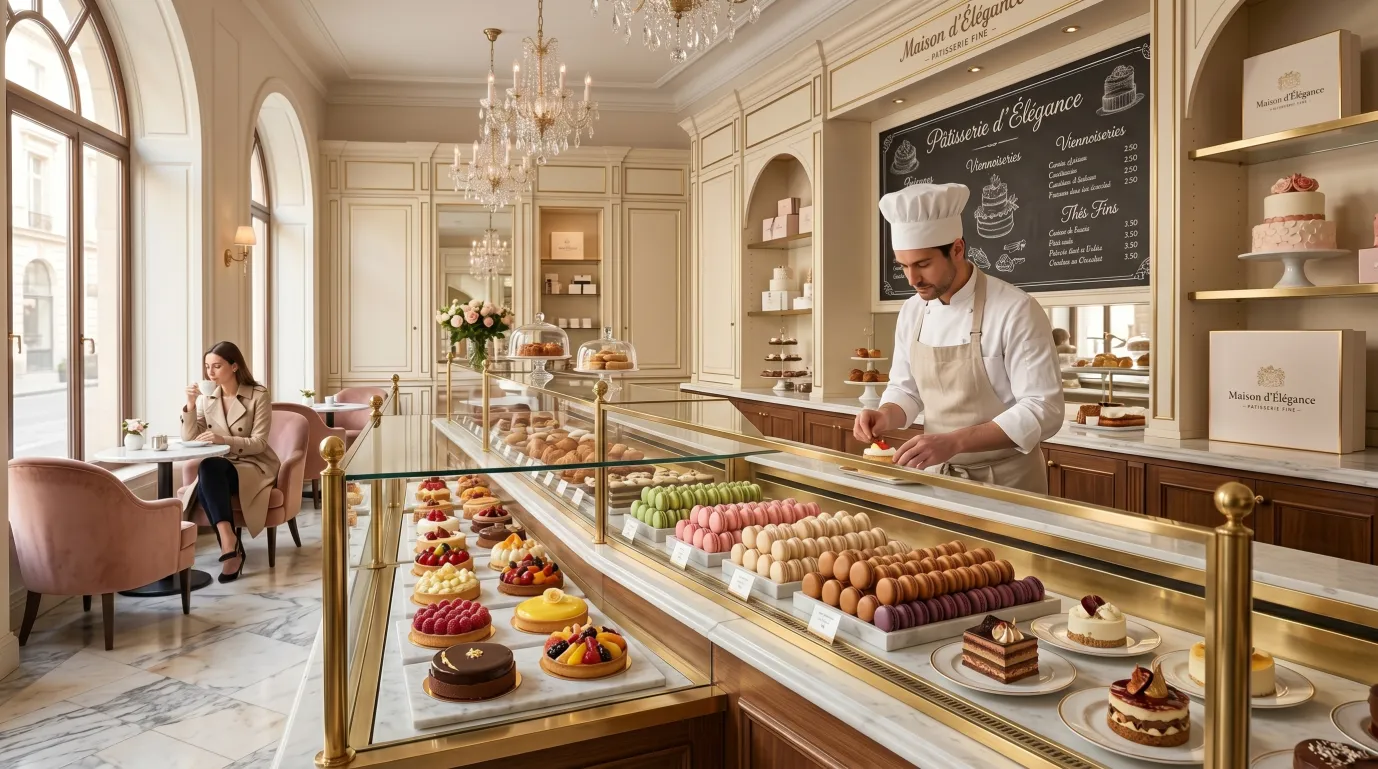
Your Business Reality
You run a French-style patisserie. Your morning starts at 4 a.m. with viennoiserie. Your day is structured around tart shells in the morning, entremets in the afternoon, plated desserts for the dinner-service restaurants you supply by 5 p.m. The tools that make this possible — silicone molds, fluted tart rings, half-sphere domes, fine sieves, microplane graters — are expensive, fragile, and a nightmare to hand-wash. You hand-wash them anyway because your last commercial dishwasher warped a $40 silicone mold within a month. Your dishwasher operator burned a $25 silver-plated chocolate spatula in the high-temp cycle. You decided dishwashers were not for you.
What You Specifically Need From a Dishwasher
A patisserie's dishwashing requirements are unusual: 1. Gentle cycle for delicate molds. Silicone, tin-plated steel, and aluminum tart rings need 60–65°C wash temperature — not the aggressive 75°C+ of a typical commercial dishwasher. 2. Final sanitization without thermal shock. Final rinse at 82°C is fine when applied briefly to room-temp items. But blasting 82°C onto a 60°C silicone mold can crack it over many cycles. 3. Capacity for irregular shapes. Tart shells stack one-deep, not nested. Half-sphere molds need to be inverted. Your rack design matters as much as the machine. 4. No corrosive residue. Final rinse must be detergent-free to avoid residue on bone china dessert plates.
How JD-3 Fits Your Operation
The JD-3 has a low-temp cycle mode designed exactly for patisserie use: - Wash tank at 60°C (configurable down to 55°C for the most delicate items) - Final rinse at 82°C applied for only 8 seconds — enough for sanitization, not enough for thermal stress on silicone - 650×550 mm rack — wider than competitors, accommodating tart shells in single-layer placement - Rinse aid metering precise enough to prevent residue spots on bone china Recommended configuration: standard JD-3 + auto detergent dispenser ($200) calibrated for patisserie use + heat recovery module ($400, helps keep your kitchen cool in summer when pastry tempering matters). Pair the machine with our optional "patisserie rack set" — purpose-designed inserts for tart rings, half-sphere molds, and quenelle spoons.
ROI for Your Operation
For a typical 1-shop patisserie supplying 2–3 restaurants: - Current state: head chef and 2 commis pastry chefs each spend ~45 min/day hand-washing delicate tools. Total: 2.25 hours/day × 6 days = 13.5 hours/week = ~$540/month at $40/hour blended pastry-chef labor rates. - With JD-3 (low-temp cycle): hand-washing for just the chocolate work tools (~20 min/day). Saves ~$430/month. Annual labor savings: ~$5,200. Less than the bakery-shop example because patisserie chefs are expensive — but the time saved goes into menu development and quality control, not just cost cutting. Payback: ~7 months. After that, the JD-3 is operating margin.